
Our intervention framework
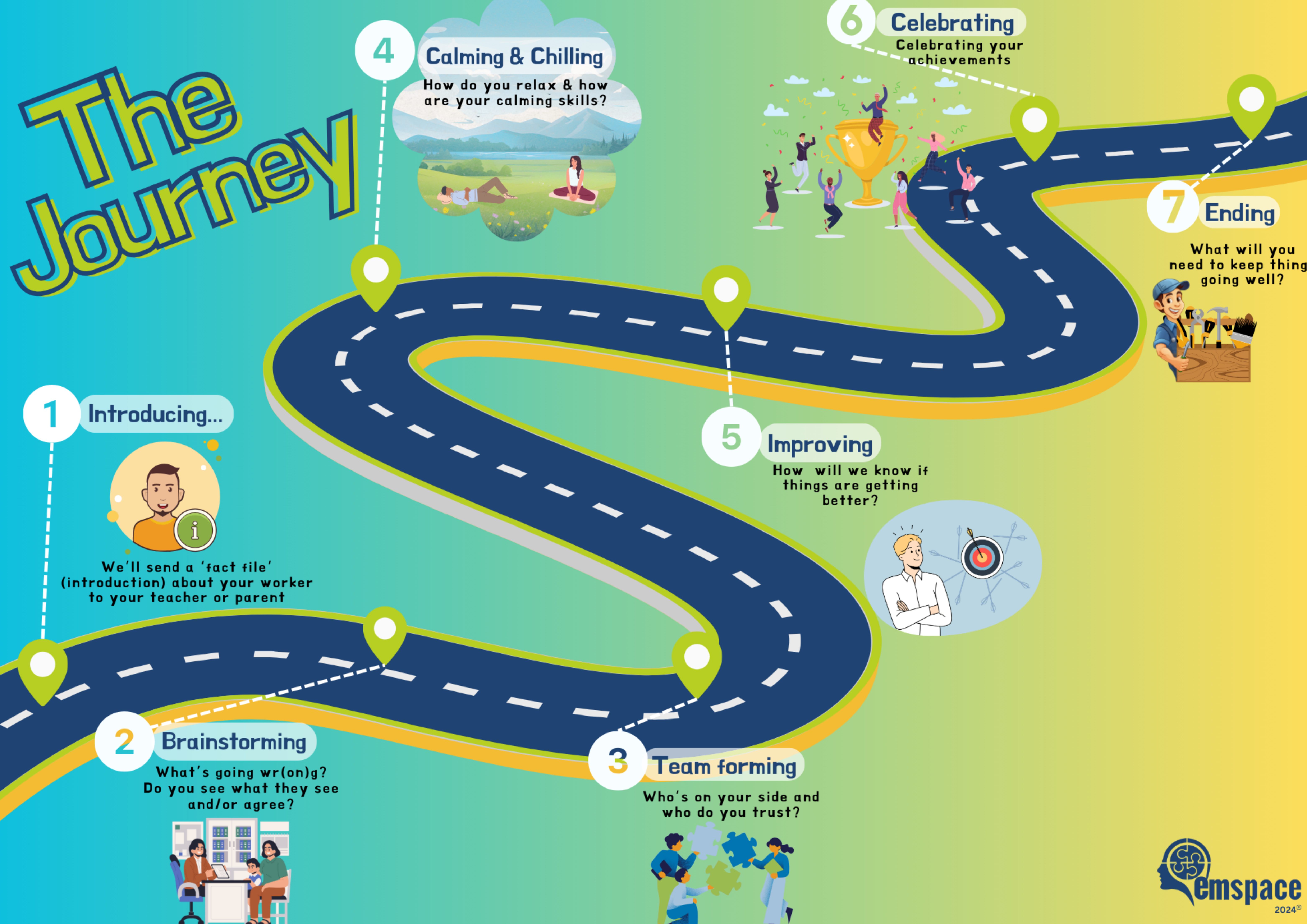
The Journey
A structured but flexible framework for working with children and young people on their emotional wellbeing, developed by EMspace over more than 25 years of direct practice in schools.
- Introducing
- Brainstorming
- Team forming
- Calming
- Improving
- Celebrating
- Ending well
What The Journey is
Not a fixed script. A road map.
The Journey takes its name from the idea that supporting a child through emotional or behavioural difficulties is not a linear process with a fixed endpoint. It is a journey, with stops along the way, some of which take longer than others, and some which a child may need to revisit.
The seven stops provide a framework that ensures nothing important is missed, while giving the practitioner, and the child, the flexibility to spend more time where it is needed.
Six principles behind the framework
Child-centred throughout
The child’s own perspective, goals and words are the starting point for every stop. The practitioner follows, not leads.
Relationship first
Research shows that up to 30% of therapeutic outcome depends on the quality of the relationship. Building trust is the work, not a preamble to it.
Flexible, not fixed
Stops can be combined, revisited or extended. The framework ensures structure without rigidity, meeting each child where they are.
Grounded in SEL
Each stop connects to one or more of the five CASEL Social and Emotional Learning competencies, giving the work a clear evidence base.
Everyone involved
School staff and parents are kept informed and involved throughout, because lasting change requires everyone to be on the same page.
Celebrating participation
Achievement is celebrated, whether significant progress or simply showing up and engaging. Participation itself is an achievement worth acknowledging.
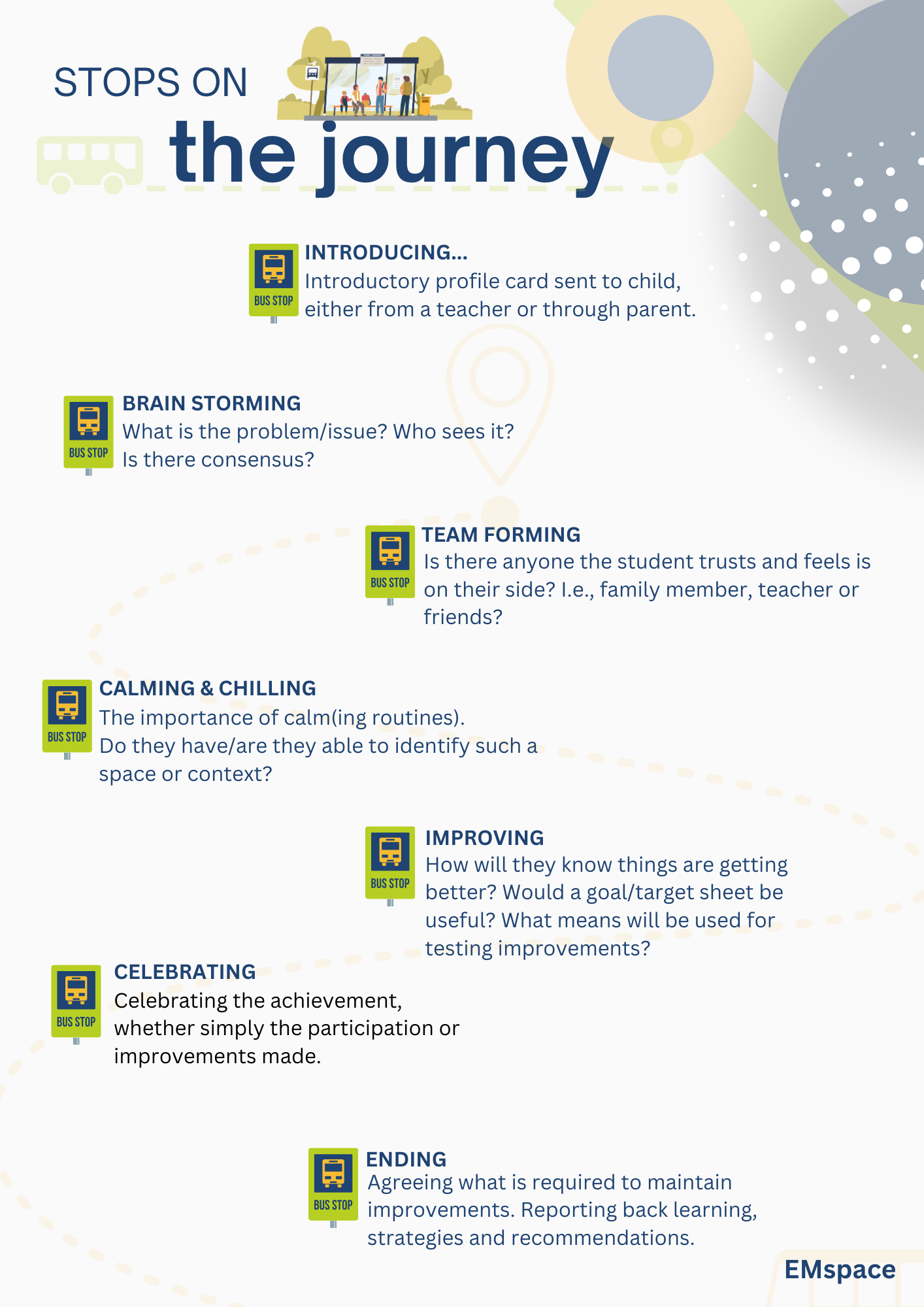
The seven stops
What happens at each stop
Each stop has a central question that guides the work at that stage, written in accessible language that makes sense to a young person, not clinical terminology.
“How are you feeling about starting this journey?”
An introductory fact file is sent to the child in advance so the first meeting feels familiar rather than strange. The goal is to begin building the relationship that will carry the rest of the work. Time here is never wasted.
“What’s going wrong? Do you see what they see?”
Understanding the problem from the child’s perspective. Do they recognise the concern? Moving from the generic to the specific is essential, a child cannot work on something they cannot name.
“Who do you trust? Who is on your side?”
Identifying the trusted adults in the child’s life who form their support network. Helping the child recognise that they are not alone, and that support already exists around them.
“How do you relax?”
Where and when the child feels most calm, safe and contained. Whether they already have self-calming skills, and what techniques for calming and coping they’re familiar with.
“How will we know if things are getting better?”
Looking at real examples of what success and improvement would look like, broken into small steps that can be measured. A clear picture of “better” makes progress visible rather than vague.
“What have you achieved, however small?”
Rewarding the child and recognising their achievements, together with others. We celebrate their willingness to try and the progress they’ve made, whatever its size.
“What will you need to keep things going well?”
Endings matter as much as beginnings. We report back to whoever asked us to work with the child, and involve their wider team in helping them sustain what they’ve achieved.
What EMspace is built on
25 years of practice, a West Midlands track record
Rob Aymer has worked directly with children and young people for more than 25 years. Between founding EMspace in 2016 and relocating to the East Midlands, EMspace worked with seven primary and secondary schools in the West Midlands. We are now building new partnerships with schools in Derby, Nottingham and the wider East Midlands.
“Every pupil who has been referred to EMspace has wanted to attend the regular sessions and has given positive feedback themselves. Both practitioners have worked hard to engage with parents as well, which has been most useful. I would recommend the service.”
Get in touch
Ready to find out more?
Whether you want to refer a young person, ask about partnering as a school, or just have an initial conversation, we are here. We reply within two working days.
Mentoring referral
Ready to refer a young person? We will respond within two working days.
Email us to referPartner with us
A school or trust in the East Midlands interested in working with EMspace.
Start a conversation